Lifestyle

The Evolution of the Korta Katarina Collection

What began as a humanitarian mission to a recovering coastline, became a lifelong commitment to a place that changed everything. From vineyards shaped by generations to a Villa restored stone by stone, from a quiet seaside hotel reborn with purpose to a yacht that carries the rhythm of the Adriatic, the Andersons built a Collection guided by respect, gratitude, and the essence of Pelješac.
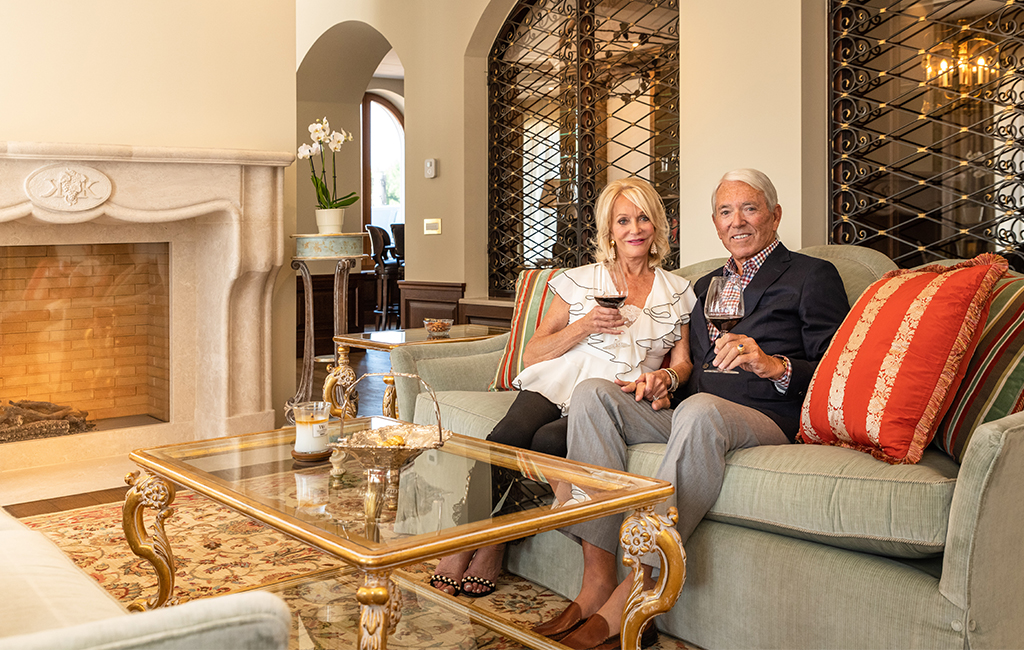
Before the first stone was lifted or the first vine was planted, there was a feeling. A quiet certainty that Pelješac was a place worth listening to. The coastline, the vineyards, the people, the history still present in the land. All of it spoke to Lee and Penny in a way they could not ignore. What began as curiosity soon became a promise.
Their story began in the early 2000s, when Lee and Penny Anderson first traveled from the United States to southern Croatia through their work with St. David’s Relief Foundation, supporting communities in the fragile years in the post war recovery period. The region was still healing, and villages were restoring homes and schools. Families were rebuilding their lives with quiet determination.
Through St. David’s, the Andersons delivered supplies, supported local families, and helped restore community spaces that had been damaged or lost. The work was hands-on and profoundly affecting. They saw resilience in the people they met, dignity in the way communities supported one another, and a sense of hope that felt both fragile and powerful.
Those days left a lasting imprint. What began as humanitarian work evolved into something more personal, a sense of belonging and a desire to contribute in a way that honored the spirit of the place. Pelješac had found them, and they listened.
The winery was the beginning, the moment when their connection to Pelješac shifted from compassion to commitment. After their work with St. David’s brought them into the region, they found themselves returning not out of obligation but out of a growing sense of belonging. The vineyards were where that feeling took root.
Even before Korta Katarina took shape, Lee and Penny were already connected to the world of wine through their philanthropic work in the United States. They were co-founders of the Naples Winter Wine Festival in Florida, one of the most respected charity wine events in the country, created to support children’s health care and the development of the Children’s Hospital of Southwest Florida. They had seen how wine could bring people together, inspire generosity, and create lasting impact. That experience shaped their belief that wine could be a force for good, a way to strengthen communities and honor the places that give it life.
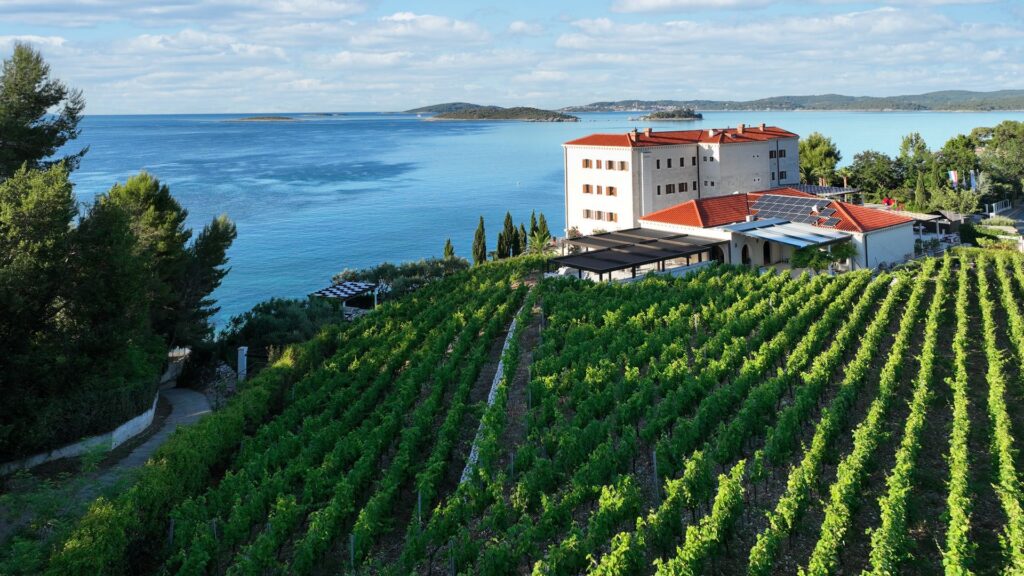
Pelješac has always been a place shaped by wine. Generations of families had tended these slopes long before the Andersons arrived, carrying forward traditions that survived hardship, war, and rebuilding. Walking along those vineyards, they felt the weight of that history and the quiet pride of the people who lived it every day.
They spent time with growers who knew each vine by memory, who could read the land by touch and instinct. They learned the character of Plavac Mali and Pošip not from textbooks but from the people who had shaped them for decades. The more they listened, the more they understood that wine was not simply a product here. It was a cultural inheritance.
That inheritance continues to reveal its strength today. Korta Katarina’s wines, now recognized among the finest in the country, carry forward the very traditions that first inspired the Andersons. The 2024 Rosé ranked the number one Rosé in Croatia, and the 2023 Babić, honored among the top five in the nation, stand as modern expressions of the land that welcomed them. These achievements are more than accolades. They are a testament to the peninsula’s resilience, its craftsmanship, and the deep continuity between past and present.
When it came time to name the winery, they chose Korta Katarina, a name that carried both local meaning and personal significance. Korta, in Croatian, evokes the idea of a courtyard or gathering place, and Katarina reflects a cherished family name. Together, it expressed exactly what they hoped the winery would become: a welcoming place shaped by community, memory, and connection.
Creating Korta Katarina Winery became their first act of stewardship. It honored the peninsula’s heritage while helping build a future grounded in opportunity and respect. The winery quickly became a symbol of renewal, a gathering place where visitors could understand Pelješac through its flavors, its stories, and its people, now elevated by wines that stand proudly among Croatia’s very best.
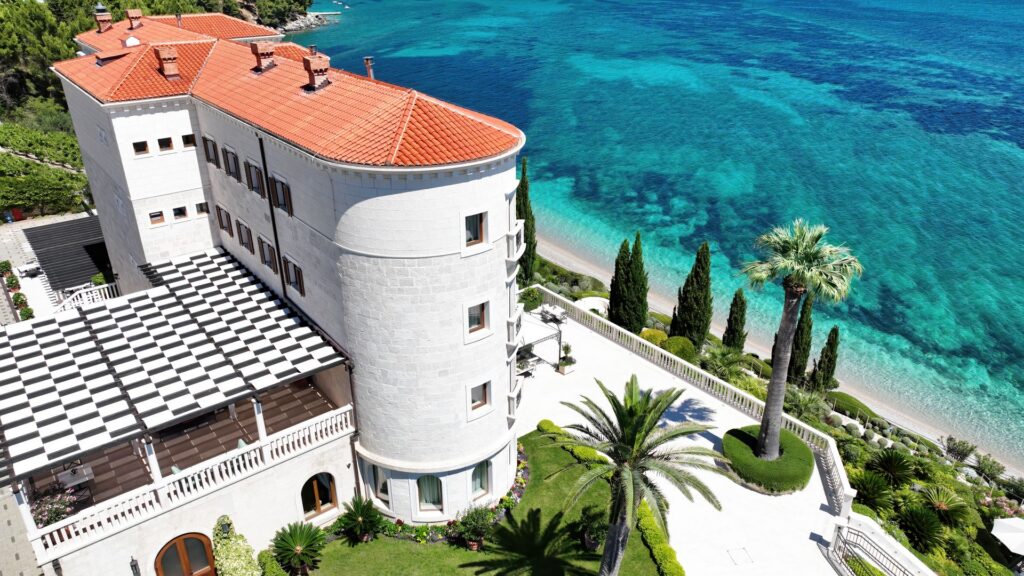
Before it ever became a private retreat, Villa Korta Katarina was a grand 1930s seaside hotel, a beloved landmark known as Hotel Rivijera and one of the defining icons of the Orebić coastline. Locals remembered its elegance, its terrace overlooking the channel, and the life it brought to the waterfront. But after the war, the building fell silent. Windows shattered, the roof collapsed, and the once graceful structure stood abandoned.
When Lee and Penny first stepped inside, they did not see ruin. They saw possibility. They saw a building with a story worth saving, a place whose spirit had not disappeared, only paused. They approached the restoration with humility, wanting to understand what Rivijera had been before imagining what it could become.
Croatian architects and artisans were brought in to study the original structure, preserving every stone that could be saved. American interior designer Marie Meko joined the effort, shaping a design that honored the building’s heritage while giving it a new life.
Together, they made a bold architectural decision: to raise the roof and create an entirely new top level, an Owner’s Suite with panoramic views of the sea and beyond.
Inside, the Villa was reimagined by the warmth and intimacy of a private residence. Eight suites were crafted to feel personal and comfortable. Juliet balconies opened to wide sea views, inviting the Adriatic into the room. Fireplaces added a sense of home. Local stone, wood and textiles grounded the interiors in place. A discreet underground passageway was created beneath the Villa, forming a private connection to the Winery and leading to an intimate Wine Room reserved for special events, private tastings, or quiet romantic moments.
The Villa became a place where guests felt as though they were being invited into someone’s home rather than checking into a hotel. Elegant without being formal, refined without being distant, it carried the spirit of the original Rivijera with a renewed sense of purpose.
Its rebirth did not go unnoticed. The Villa was welcomed into Relais & Châteaux in 2020, and in 2025 it received a MICHELIN Key, affirming what guests already felt. This was a place restored with care, respect, and heart.
As the Villa found its voice, another story waited quietly just down the shoreline. The former Hotel Indijan was not grand or imposing. It was intimate, familiar, and human. A modest, family-run beach-front hotel, it had been a quiet refuge for Lee and Penny throughout the Villa’s restoration years. It was where they woke to the sound of waves before long days on the nearby villa construction site, where they shared simple meals with the family who ran it, and where evenings ended with the sky fading over the channel toward Korčula.
The hotel held the calm intervals of the journey, the ones that never make headlines but shape everything. Over time, their relationship with the family deepened into something personal and enduring. So when the family decided it was time to pass the hotel on, they approached Lee and Penny directly, believing they were the only ones who would protect its spirit and carry its story forward.
What followed was a thoughtful, deliberate process. The family shared the history of the hotel, the hopes they had for its future, and the responsibility they felt in choosing its next caretakers. By the time the agreement was finalized in January 2024, it was clear this was more than a purchase. It was a transfer of trust.
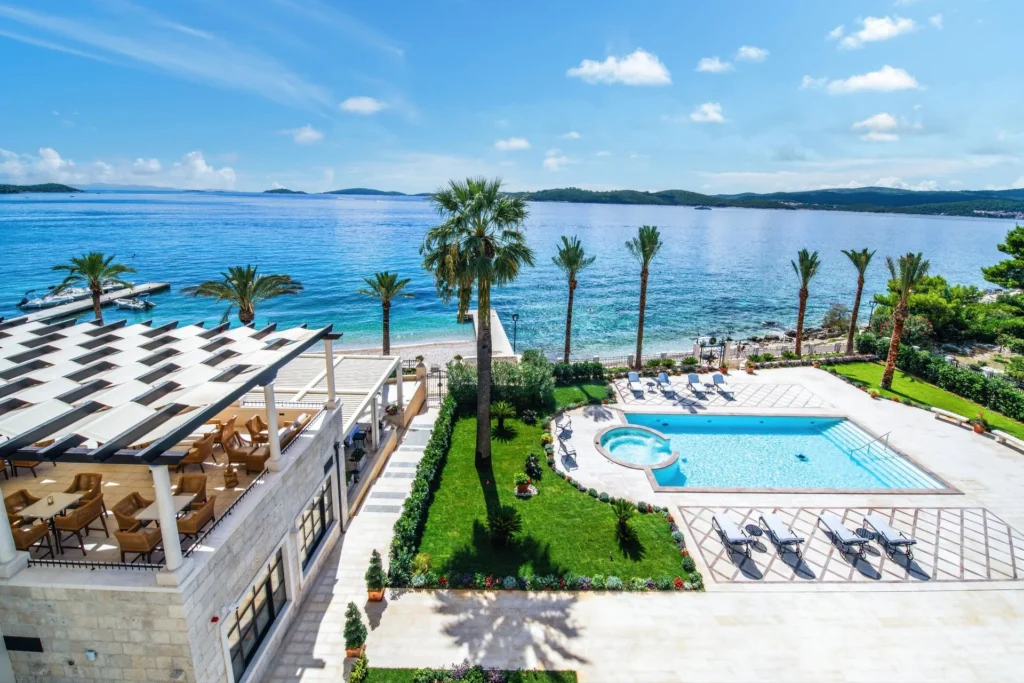
The transformation embraced a modern Adriatic sensibility. Clean lines, prime beachfront location, soft coastal tones, and a sense of ease that felt true to Orebić. Marie Meko returned to shape interiors that were contemporary yet warm, refined yet relaxed. Local craftsmen brought the design to life with skill and pride.
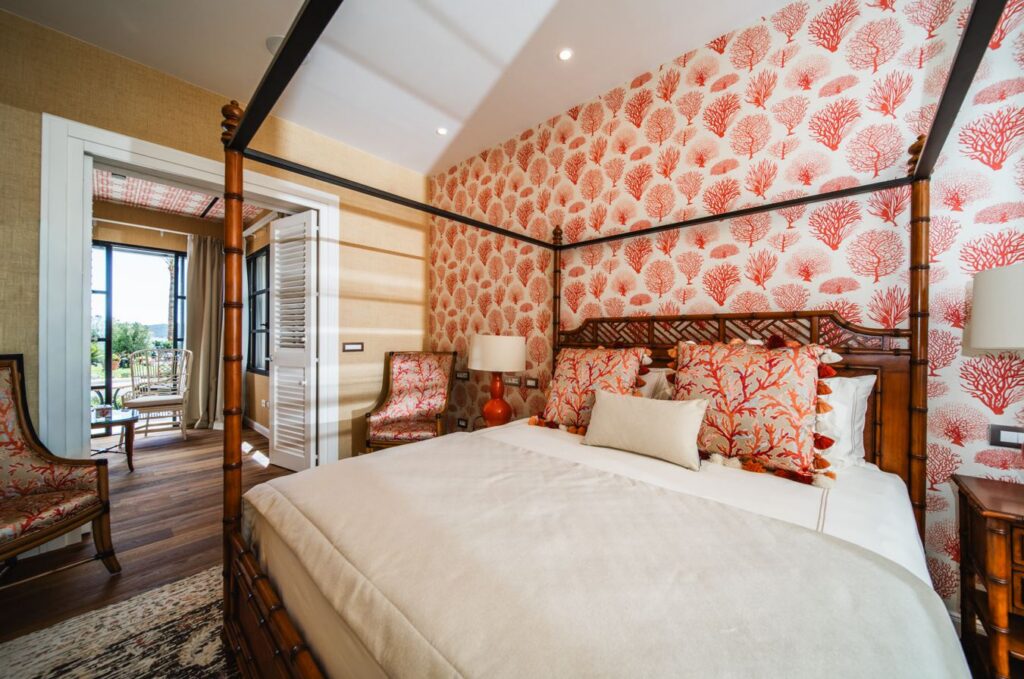
Rooms were opened to the light. Textures were softened. Spaces were designed to feel effortless, the kind of luxury that whispers.
And then there was the view. From the hotel’s terraces and suites, and especially from the restaurant’s elevated perch, the horizon opens toward Korčula, the channel catching the morning light in a way that feels almost unreal. In the evenings, the sunsets turn the entire coastline gold and rose, the kind of quiet spectacle that stops you mid sentence. One of the most beautiful vantage points on the peninsula finally had a home worthy of it.
Reopened in late 2025 as Hotel Katarina, the property introduced a new dimension of coastal living to Orebić. Elegant, intimate, and directly connected to the beach and the sea, it offers a sense of ease that feels both natural and elevated. Its first official season begins in April 2026, already marked by early acclaim, including acceptance into Relais & Châteaux.
As the Villa was being restored and Hotel Katarina was finding its new life, the Andersons had already come to know Pelješac from the water. Their connection to the Adriatic was shaped aboard Yacht Katharine, a classic, custom built 201-foot CRN vessel whose graceful lines and quiet elegance had been part of their Croatian story from the beginning.
Katharine carried them through the archipelago during the years of restoration, offering moments of stillness between long days of work. From her decks, they watched the peninsula shift in color and light, saw vineyards cascading toward the shore, and discovered coves and inlets that could only be reached by water. She revealed Pelješac from a different perspective, one that was expansive, cinematic, and personal.
Over time, Katharine became woven into the fabric of their journey. She hosted family gatherings, evenings at anchor, and exploration trips that shaped their understanding of the region they had come to love. Her presence was constant and reassuring, a reminder that the Adriatic was not just a backdrop to their work but an essential part of the place they were helping to restore.
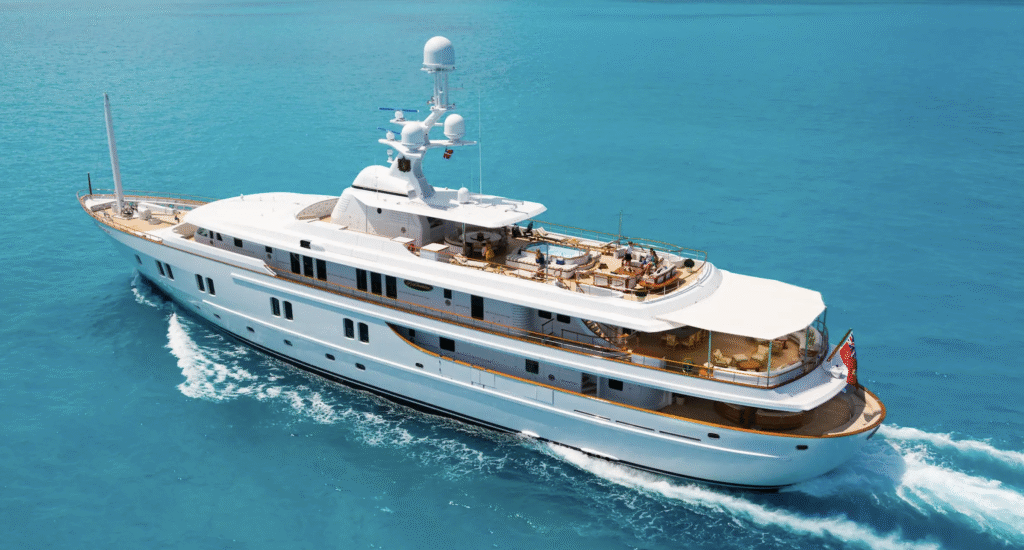
Today, Yacht Katharine is available for private voyages of seven days or more, offering guests the opportunity to experience the Adriatic the way the Andersons first did, unhurried and connected to the landscape.
Life aboard Katharine is defined by ease rather than extravagance. Sunlight moves across teak decks. The sea shifts from silver to blue. Evenings unfold beneath a sky filled with stars. It is a kind of luxury that invites reflection rather than spectacle.
Katharine completes the Collection not by adding something new but by revealing something essential: that Pelješac is best understood in motion, with the sea as both companion and guide.
Taken together, the Winery, the Villa, Hotel Katarina, and Yacht Katharine form a Collection shaped by purpose and guided by place. Each chapter stands on its own, yet all are connected by the same quiet philosophy: that true luxury is rooted in authenticity, stewardship, and the relationship between people and the land they choose to honor.
What began with St. David’s Relief Foundation, as an act of service and compassion evolved into a long-term commitment to Pelješac. The Andersons did not set out to build a Collection. They set out to honor a region that had shown them resilience, beauty and grace in the wake of hardship.
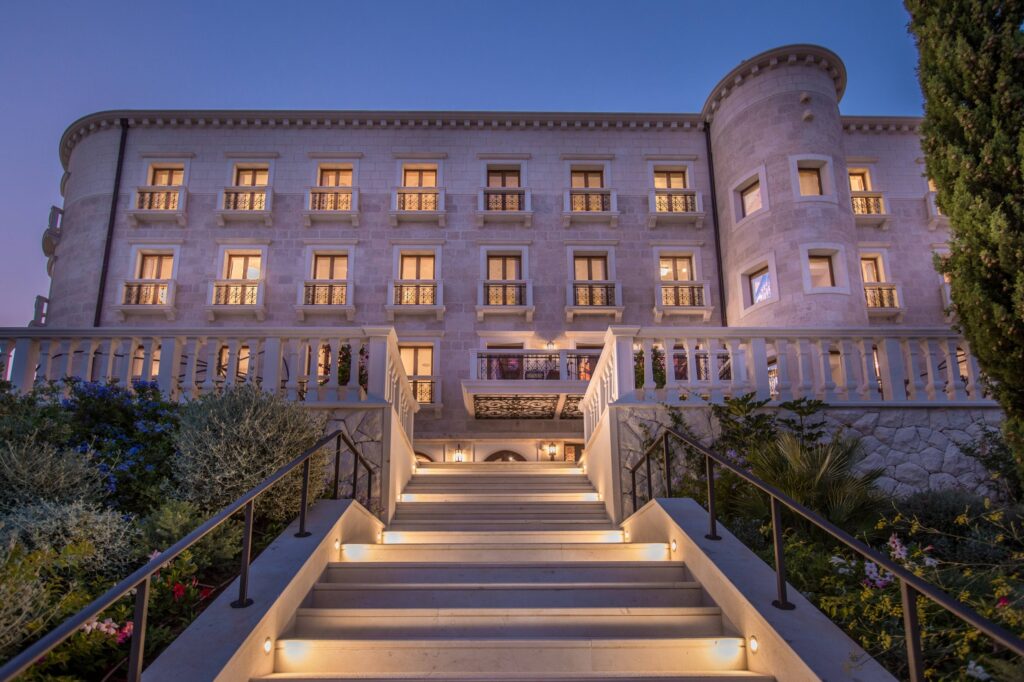
Today, their story lives in the details: in a glass of wine poured from vines they once walked as visitors, in the restored stone of a Villa that feels both historical and alive, in the calm confidence of a hotel that completes the view, and in the soft arc of a yacht tracing the coastline at dusk.
This is not just a destination. It is a legacy, held in harmony with land, sea and vine.
Aug 28, 2024
Aug 05, 2024
May 26, 2024
Jul 28, 2025