A Masterpiece on a Plate: The Edible Art at La Pista by Dejan Veljin

Miodrag Spahić - Mar 09, 2026
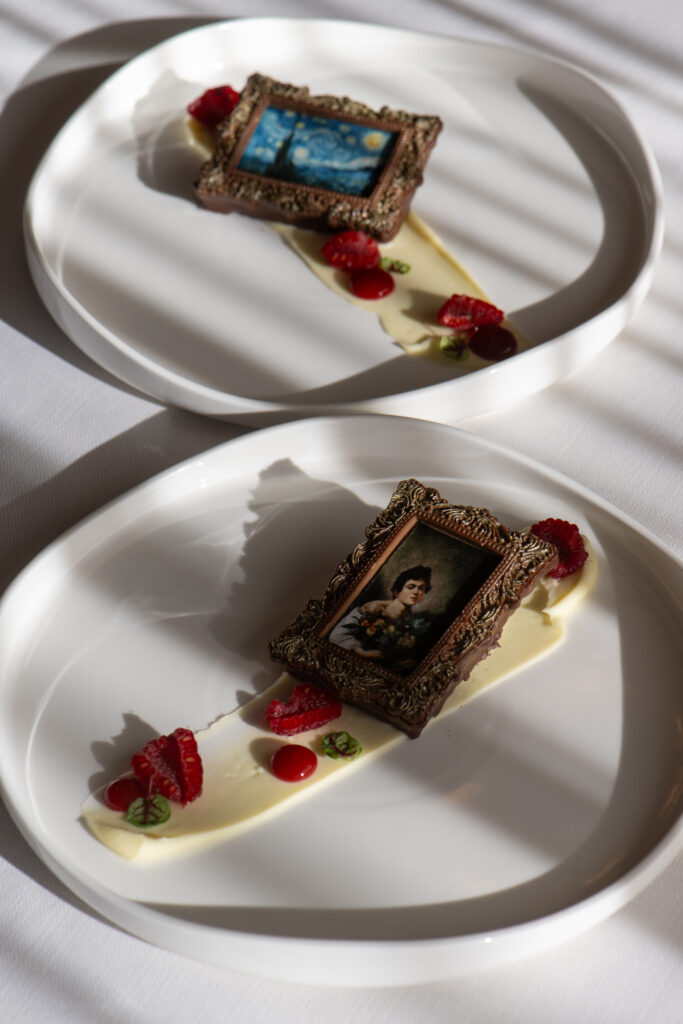
In the realm of fine dining, the line between gastronomy and visual art is often blurred. At La Pista Experience, that line is entirely erased with their signature dessert: the “Frame of Traveling Pictures”. Serving as the grand finale of their tasting menu, this creation acts as a literal frame that encapsulates an entirely new presentation of Serbian and global painting classics.
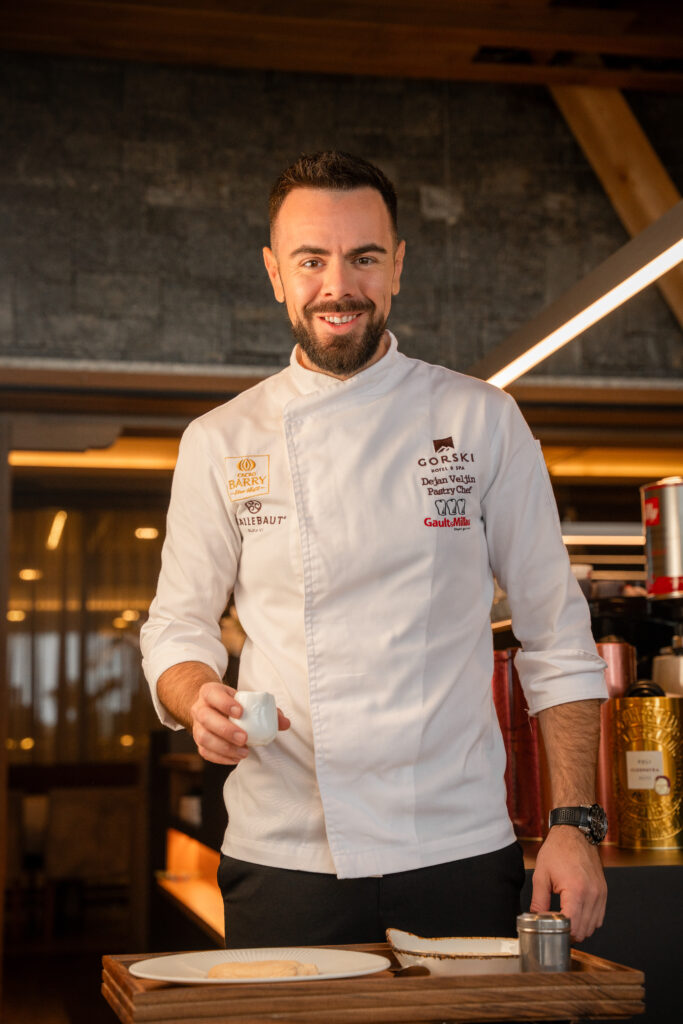
We sat down with Dejan Veljin, the visionary pastry chef behind these edible masterpieces, to discuss his inspirations, his award-winning techniques, and how a combination of hazelnut, raspberry, and dark chocolate cream can frame a bite-sized picture that will definitively remain in your memory.


The Collection: The “Frame of Traveling Pictures” is a visually unique dessert. What was the core idea behind this concept?
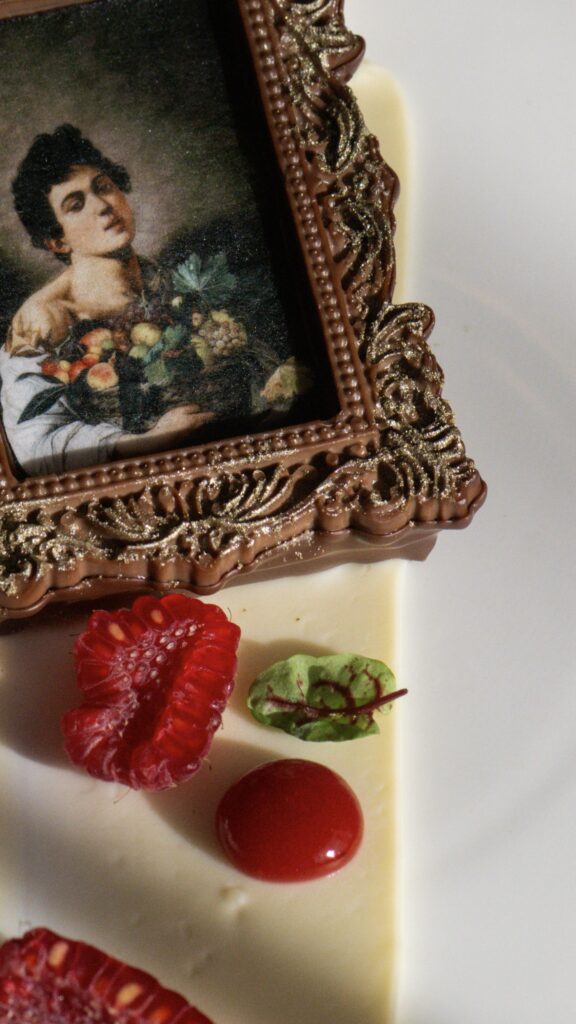
D.V.: It is, quite simply, a picture frame made out of chocolate. In the center, we place a picture of famous artists. We wanted to bring art closer to our guests; since we consider ourselves artists who “paint on plates,” I wanted to connect that specific segment. The dessert itself consists of dark chocolate cream, raspberries that are deeply associated with Serbia, hazelnut, and white chocolate, all set upon a crunchy base made of French biscuit. Ultimately, it is two types of chocolate, and that is it.
The Collection: You were recently named Best Pastry Chef 2023. How has this recognition impacted your personal standards and your audience’s expectations?
D.V.: Receiving “The Best Pastry Chef” recognition in 2023 from the Gault & Millau guide and the Taste Awards meant a great deal to me; it was a confirmation that I am on the right path. Since then, it serves as a reminder that I need to continue on this journey and climb even higher, pushing the boundaries of pastry within the Serbian gastronomic scene. As for my personal standards, we have definitely raised them, and I believe that is clearly visible in the desserts I put out.
The Collection: If you had to describe your culinary work as an art movement, what would it be?
D.V.: I would say it is the French style done the Serbian way, executed in my own free interpretation. This is a nod to the famous painter Sava Šumanović and his style of working “as best I know how”. The most important thing is that you are not restricted by ingredients, working conditions, or anything else, leaving your hands entirely open to create whatever you imagine. It is a free style that characterizes me through my desserts.
The Collection: Is there an artwork you are eager to translate into a dessert next?
D.V.: Regarding an artistic piece I would like to translate into a dessert in the future, there is currently nothing specific in my head. But you never know when or what might emerge as the next piece of art on a plate.
The Collection: How do your guests react? Do they grasp these high-art references, and does it lead to a deeper dining experience?
D.V.: The reactions from the audience are incredibly positive; they recognize my direction and my work, and I am very glad about that. In fact, many guests return specifically just for the desserts. The absolute delight on their faces when they try these desserts is surreal. When the dessert is brought to the table, everyone is left completely speechless, asking, “Are you real, that you have recreated paintings by famous painters in a dessert?”. I am so grateful to do this job, because when you see the reaction of the public and the guests, it becomes entirely clear why you do it.
The Edible Gallery: A Closer Look
La Pista’s menu serves as an evolving exhibition space. Here is a look at the spectacular masterpieces currently on display:
Vincent van Gogh – The Starry Night (1889, MoMA New York)
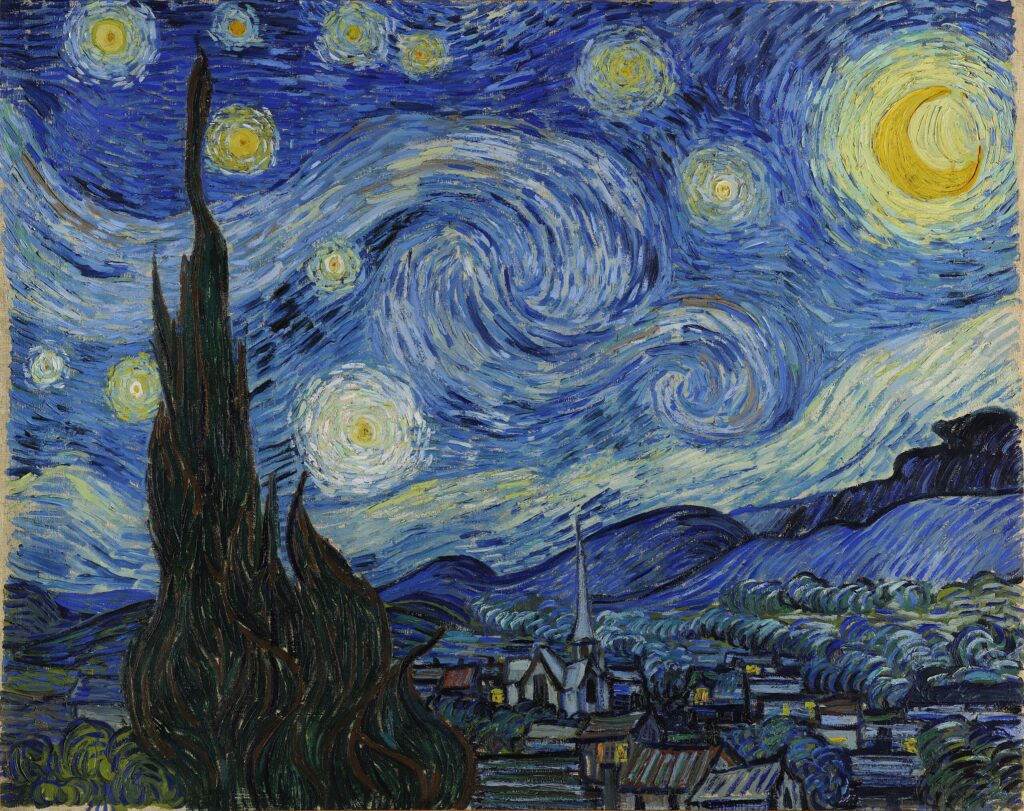
Van Gogh is served not as a mere reproduction, but as an edible interpretation of one of the world’s most famous paintings. Created in 1889 in Saint-Rémy, during a time when the artist painted caught between reality and his own inner turmoil , “The Starry Night” remains an icon of modern art where a nocturnal landscape is transformed into an emotional map with swirling skies and pulsating light. Because this painting captures a look from within rather than a simple view through a window , the dessert utilizes a heavy, baroque frame while the edible “picture” itself appears to be in motion, mirroring Van Gogh’s sky. In this culinary translation, the dessert’s texture follows the brushstroke, its contrast mirrors the light, and its flavor carries the profound idea that art can be vividly experienced through the palate.
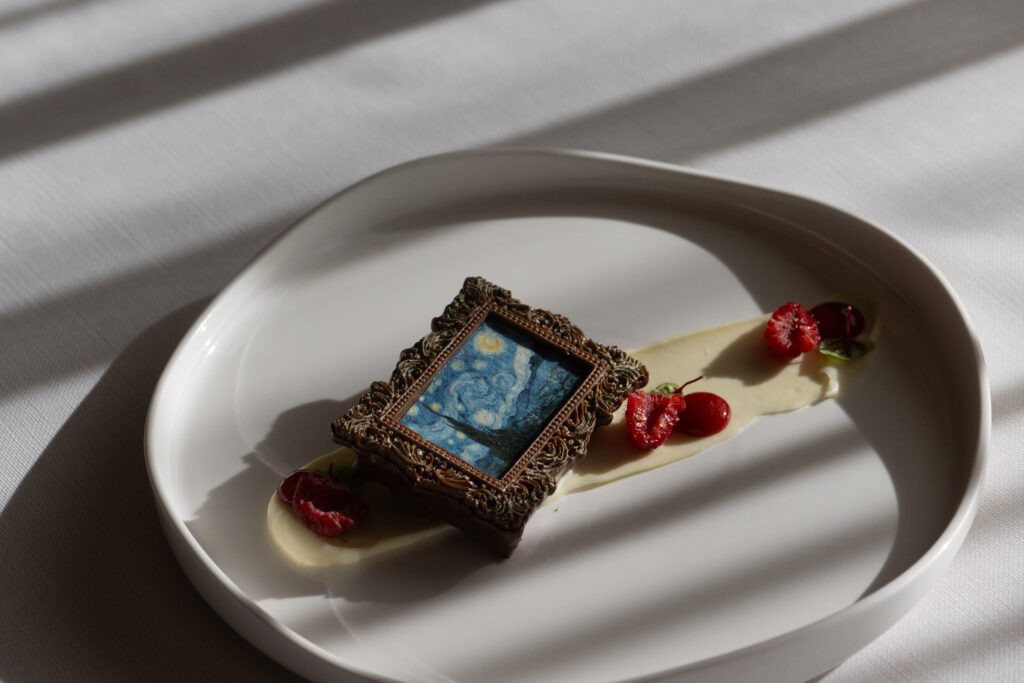
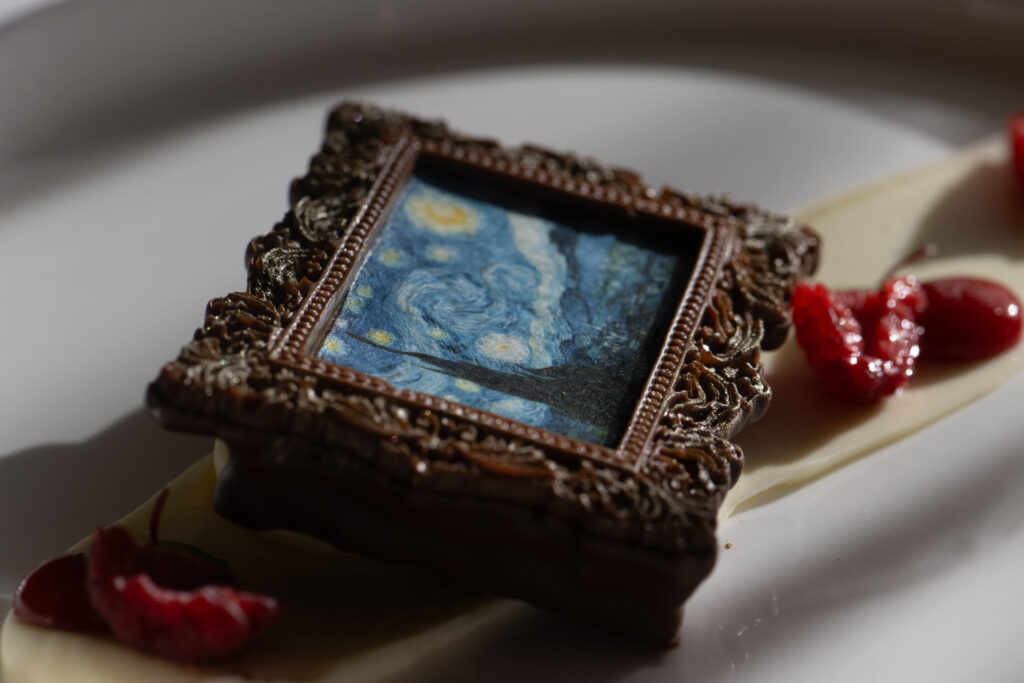
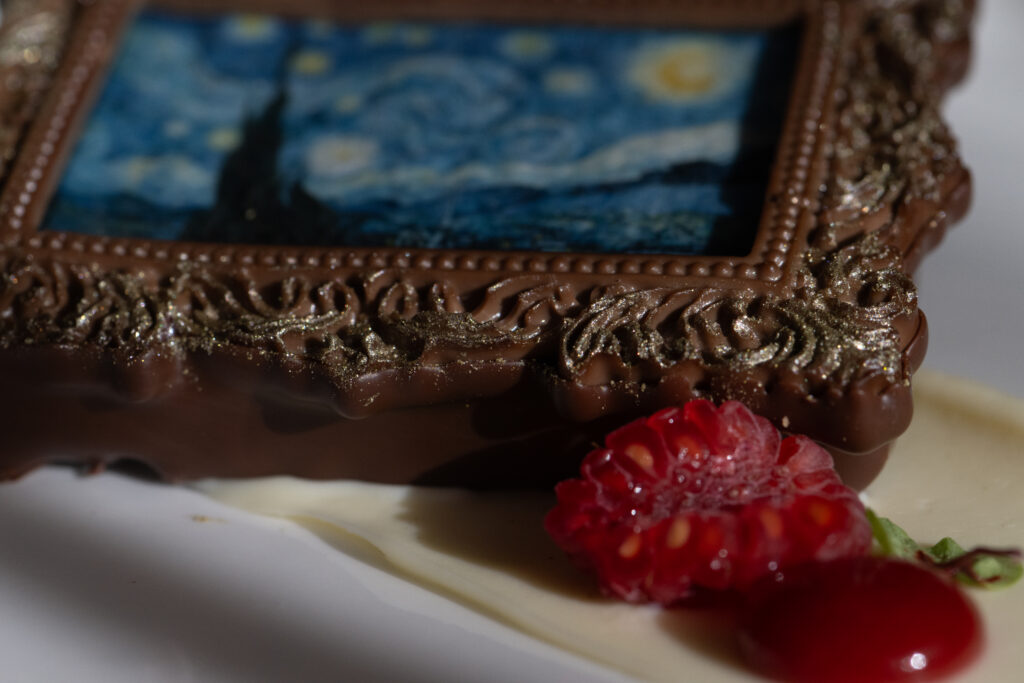
- This creation is not a mere reproduction; it is an edible interpretation of one of the most famous paintings in the world.
- The original artwork was created in 1889 in Saint-Rémy, during a period when Van Gogh painted between reality and his own inner turmoil.
- It stands as an icon of modern art: a night landscape transformed into an emotional map, where the sky swirls and light pulsates like a rhythm.
- Because the painting represents a look from within rather than a simple “look through a window,” the dessert utilizes a heavy, baroque frame while the “picture” appears to be in motion, mirroring Van Gogh’s sky.
- In this culinary translation, the texture follows the brushstroke, the contrast follows the light, and the taste carries the profound idea that art can be experienced through the palate.
Sava Šumanović – The Grape Pickers (1942, Gallery of Pictures “Sava Šumanović”, Šid)
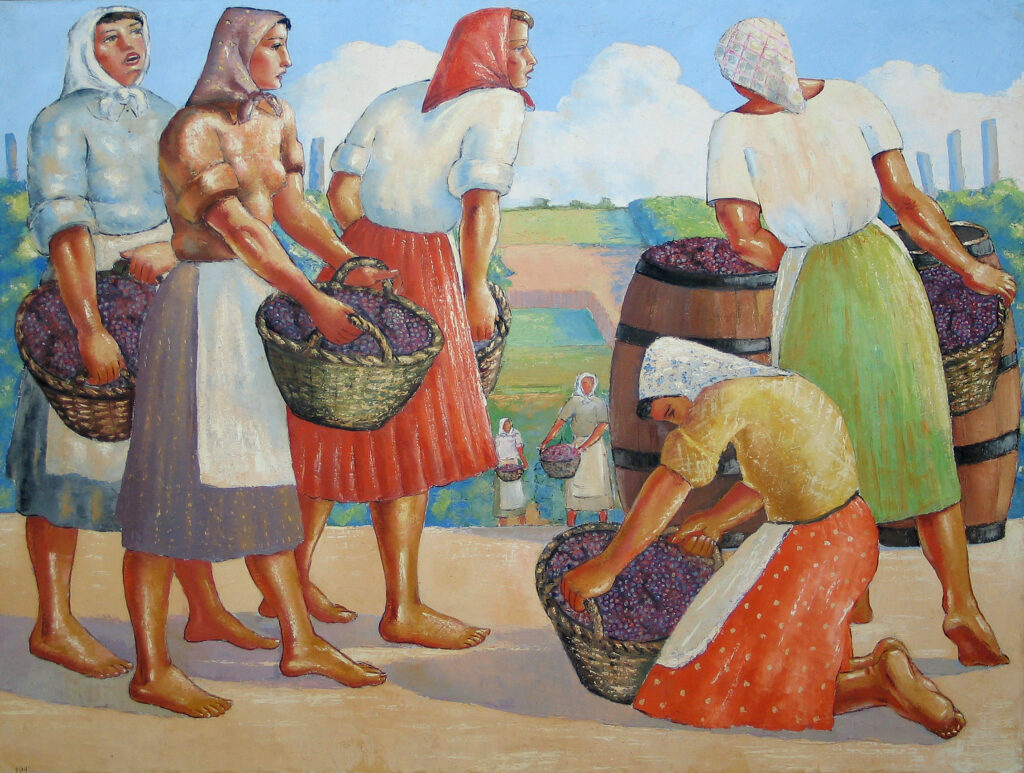
This creation is far more than a simple harvest scene; it is the monumental rhythm of work, summer, and life seamlessly transformed into a sweet course. Painted as a large triptych in 1942, it stands as one of Šumanović’s most recognizable works and a pinnacle of 20th-century Serbian painting, characterized by a wide composition, clear colors, and a monumental simplicity that carries both joy and profound seriousness. The original artwork is preserved in the Gallery of Pictures “Sava Šumanović” in Šid as part of the artist’s legacy. By recreating it, the pastry team demonstrates that domestic art possesses immense global strength. On the plate, Šumanović’s visual purity is directly translated into taste, featuring layers that are calm, precise, and bright, much like a cinematic frame that lingers on the palate.
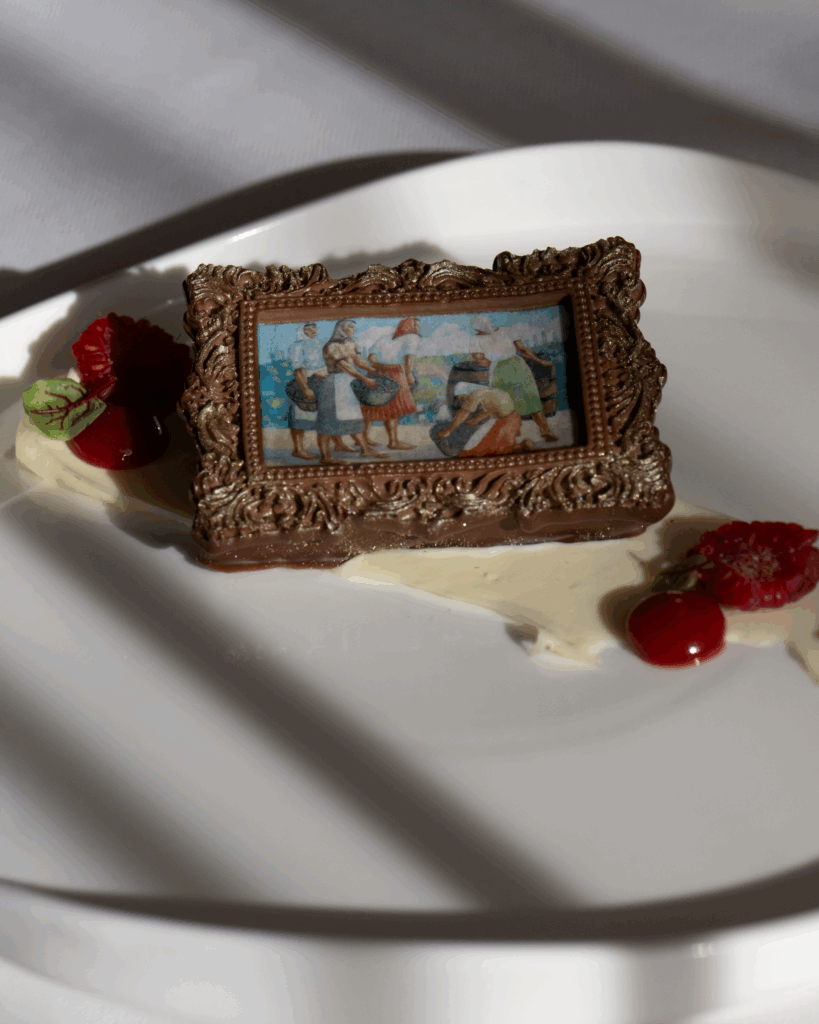
- This piece showcases the monumental rhythm of work, summer, and life, seamlessly transformed into a sweet course.
- Painted as a large triptych in 1942, it remains one of Šumanović’s most recognizable works and sits at the pinnacle of 20th-century Serbian painting.
- Housed as part of the artist’s legacy in Šid, the original artwork features a wide composition, clear colors, and a monumental simplicity that carries both joy and seriousness.
- Creating this dessert is La Pista’s way of demonstrating that domestic art possesses immense global strength.
- On the plate, his visual purity is translated directly into taste: the layers are calm, precise, and bright, much like a frame that lingers on screen.
Paja Jovanović – Cockfight (c. 1900, Gallery of Matica Srpska, Novi Sad)
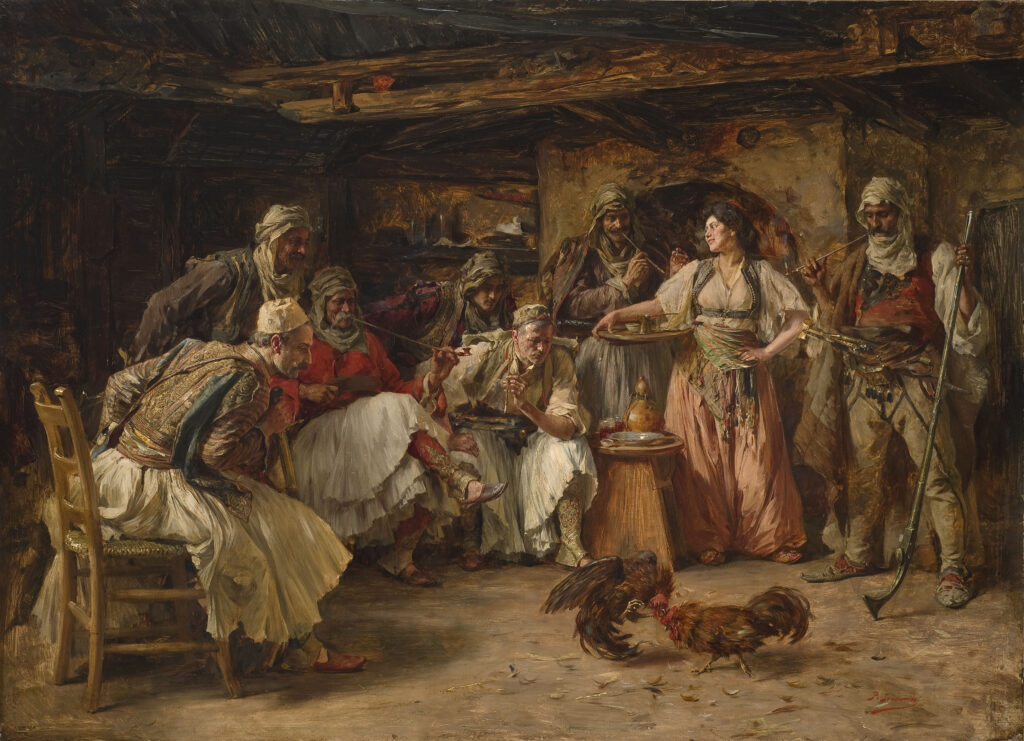
Paja Jovanović acts as the ultimate director of this scene, presenting a true spectacle of tension caught a mere second before the outcome. This genre-scene, dating back to around 1900, brilliantly captures the live theater of everyday life, including the ritual of entertainment, the energy of the crowd, and the raw drama and passion of the moment. The original oil on canvas is proudly kept in the permanent 19th-century art exhibition at the Gallery of Matica Srpska. To mirror this masterpiece, the dessert features a classic frame that encloses a decidedly restless narrative inside. In this edible interpretation, the key is not in creating a static copy, but in capturing the dynamics; the taste follows the tension of the composition, leaving you exactly where the painting leaves you—right in the middle of the unfolding event.

- This genre-scene oil painting, dating back to around 1900, captures the live theater of everyday life, including the ritual, the audience, the impulse, and the passion of the moment.
- It is a spectacle of tension, perfectly catching the raw drama of the second just before the outcome.
- To mirror this, the dessert’s frame is classic, while the story inside is decidedly restless.
- In this edible interpretation, the key is not copying, but rather dynamics; the taste follows the tension of the composition, leaving you exactly where the painting leaves you: right in the middle of the event.
Nadežda Petrović – Woman with a Parasol (1907, National Museum of Serbia, Belgrade)
Nadežda Petrović did not simply paint a “beautiful picture”; she painted attitude, light, and character. Her 1907 masterpiece, housed in the National Museum of Serbia , uses her sister Ljubica as a model, providing an intimate motif while maintaining an exceptionally modern expression. It is a striking portrait of light and temperament where the brushstroke signifies raw strength rather than delicate finesse. This dessert serves as a quiet homage to a woman who continually pushed boundaries in both art and life. The culinary interpretation strictly follows the painting’s original principle: prioritizing light over decoration and character over form, resulting in a taste profile that remains exceptionally clean, direct, and present.
- Petrović did not paint just a “beautiful picture”; she captured attitude, light, and character, portraying a portrait of light and temperament where the brushstroke signifies strength rather than finesse.
- The dessert serves as a quiet homage to a woman who continually pushed boundaries in both art and life.
- The 1907 painting, located in the National Museum of Serbia, uses her sister Ljubica as a model, providing an intimate motif while maintaining an exceptionally modern expression.
- The culinary interpretation follows the same principle: prioritizing light over decoration and character over form, resulting in a taste that is clean, direct, and incredibly present.
Caravaggio – Boy with a Basket of Fruit (c. 1595, Galleria Borghese, Rome)
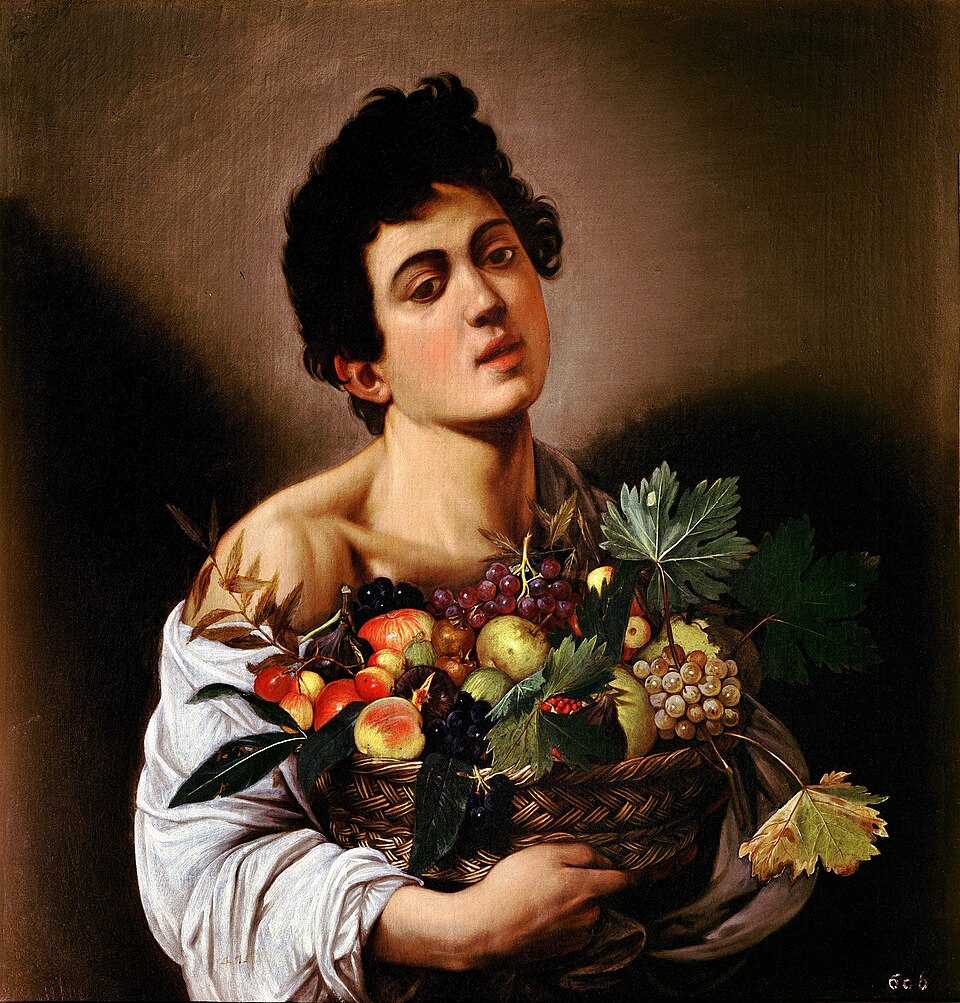
Caravaggio famously pushed realism to the absolute edge of truth; his depicted fruit is not perfect, and that is precisely why it is so incredibly powerful. This early work, an oil on canvas housed in the Galleria Borghese in Rome , dates to around 1595 and depicts a boy in a three-quarter profile alongside fruit and leaves that bear the intentional “imperfections” of nature. It is widely celebrated as a demonstration of Caravaggio’s exceptional ability to showcase reality without idealization, featuring the flaws and the undeniable traces of time. To capture this essence, the dessert uses a rich, baroque frame to hold the vibrant life inside, much like Caravaggio’s own framing. This artistic philosophy is masterfully translated into texture; the dessert’s layers are not made smooth merely for the sake of beauty, but are rather precise for the sake of truth, because taste, just like a painting, acts strongest when it is entirely real.
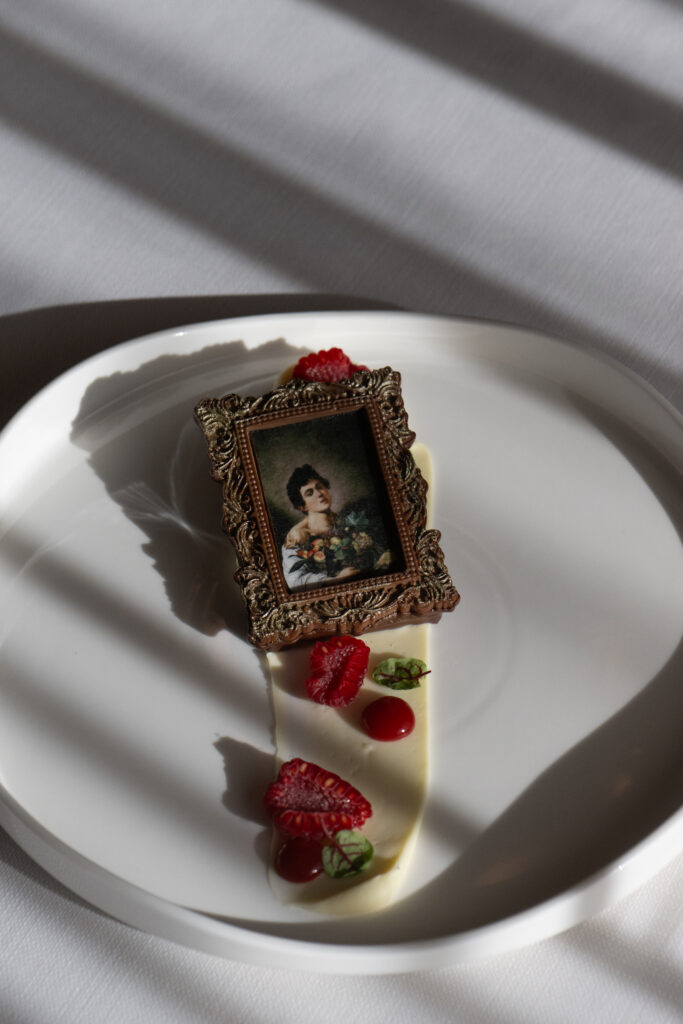

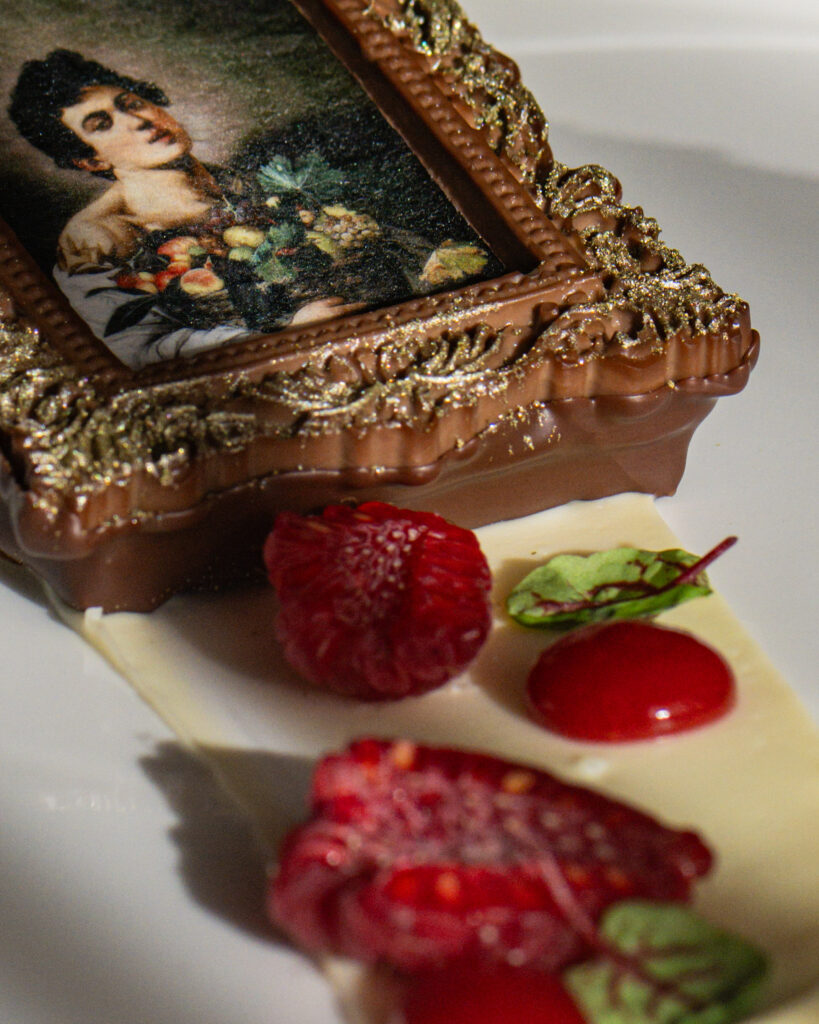
- This early work, an oil on canvas housed in Rome, is famous for pushing realism to the absolute edge of truth, depicting the boy in three-quarter profile alongside fruit and leaves bearing the intentional “imperfections” of nature.
- It demonstrates an exceptional ability to showcase nature without idealization, featuring the flaws, the traces of time, and profound reality.
- Because the fruit is not perfect, it becomes incredibly powerful.
- To capture this, the dessert uses a rich baroque frame to hold the vibrant life inside.
- This artistic philosophy is translated into texture: the dessert’s layers are not made “smooth for the sake of beauty,” but rather precise for the sake of truth, because taste—just like a painting—acts strongest when it is entirely real.
Photographs by Oliver Bunić